TQA Industry Standards
TQA works with experts in the equine and ranching industry to set guidelines and standards in training and selling horse to the public as well as working on ranches and feedlots where horsemanship, stockmanship and roping skills are required.
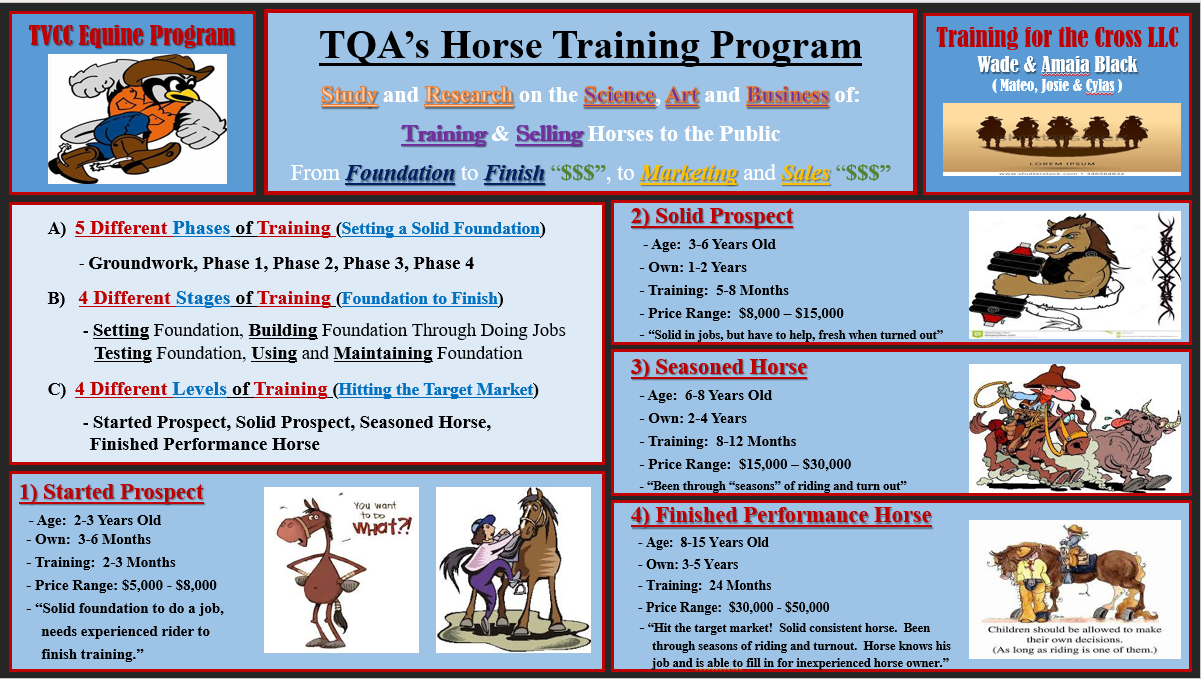
TQA’s horse training guidelines and standards are broken down into 5 levels of setting a foundation, 4 stages of training and 4 levels of training to help horse trainer’s “hit the target market” when training and selling horses to the public.
Below is a graph breaking down the process of training horses and how the TQA tracking system can be used to help horse trainers reach their goals.
TQA Guidlines and standards
TQA Guidelines and Standards are Broken Down into Two Main Categories:
Foundation & Foundation to Finish

OPTION 1
Foundation
TQA’s “Foundation” section focuses on setting guidelines and standards for two months of professional horse training to set the foundation on a horse. This includes colt starting and foundation tune-ups.
OPTION 2
Foundation to Finish
TQA’s “Foundation to Finish” section focuses on providing TQA curriculum to help students take horse through four consecutive phases in Ranch Roping, Feedlot, Reining, Fence Work, and Rodeo (Heading, Heeling, Breakaway). This section focuses on training an “industry ready” horse.
Training Quality Assurance (TQA)
Training Quality Assurance as a non-profit organization is designed to help horse trainers reach their goals through offering resources to track horses training to reach year end goals. At the core of TQA is the Training Trifecta: Temperament, Foundation, and Task Completion—three essential pillars that guide a horse’s development. TQA partners with respected experts in the equine and ranching industries to provide practical curriculum and tracking tools to ultimately help horse trainers reach their goals in training and selling horses to the public. TQA uses structured daily riding logs and a horse owner breakeven budget sheets to help trainers document progress, identify strengths and challenges, as well as make informed training and budgeting decisions.